
Wedding Dates That Coincided With Major Football Tournaments
Planning a wedding is usually about seasons, venues, guest availability, and personal symbolism. Yet for millions of couples around the world, there is another factor that has quietly influenced wedding calendars for decades: major football tournaments. Events like the FIFA World Cup, UEFA European Championship, Copa América, and continental club tournaments have repeatedly overlapped with wedding dates, sometimes intentionally, sometimes disastrously.
Football tournaments are not just sporting events. They are cultural moments that dominate calendars, media coverage, travel plans, and even emotional attention spans. When weddings coincide with these tournaments, the results range from humorous anecdotes to serious logistical challenges. This article explores real wedding dates that coincided with major football tournaments, why these overlaps happen so often, and what they reveal about the relationship between football culture and life’s biggest personal milestones.
Why football tournaments often overlap with wedding seasons
Most major football tournaments are scheduled during late spring and summer. This timing is deliberate: leagues are finished, players are available, and weather conditions are favorable for international travel and outdoor matches. Coincidentally, this same period is considered peak wedding season in many countries.
June and July, in particular, are prime months for weddings across Europe, South America, and parts of Asia. The overlap is therefore structural rather than accidental. Couples booking venues a year or more in advance may not fully account for tournament calendars, especially when dates are not finalized early.
This recurring clash has produced countless stories of guests watching matches on phones during receptions, grooms disappearing during halftime, and wedding planners negotiating kickoff times as if they were part of the ceremony schedule.
Famous examples of weddings during major football tournaments
Over the years, many well-documented weddings have taken place during major tournaments. Some couples embraced the timing, while others underestimated its impact.
One notable example occurred during the 2018 FIFA World Cup in Russia. Several European weddings scheduled in June and July that year coincided with group-stage matches and knockout rounds involving national teams. In England, wedding planners reported a spike in requests to install televisions or projectors at venues on days when England played.
During the 2014 World Cup in Brazil, weddings held on match days faced significant attendance issues. Guests either arrived late or left early to watch games, particularly during Brazil’s knockout matches. In some cases, entire receptions paused during kickoffs.
UEFA European Championships have produced similar situations. The Euro 2016 tournament in France overlapped with thousands of weddings across Europe. Matches scheduled in the evening hours often conflicted directly with dinner and speeches, creating awkward choices for football-loving guests.
Major football tournaments and common wedding overlaps
| Tournament | Typical Dates | Common Wedding Conflict Period |
|---|---|---|
| FIFA World Cup | Mid-June to mid-July | Peak summer weddings |
| UEFA European Championship | June to early July | Saturday evening receptions |
| Copa América | June (varies by edition) | Regional summer ceremonies |
| Africa Cup of Nations (summer editions) | June–July (historically) | Destination weddings |
| UEFA Champions League Final | Late May / early June | Late spring weddings |
This table illustrates why clashes are so frequent: football’s biggest events occupy the same calendar windows most favored for weddings.
When couples intentionally choose tournament dates
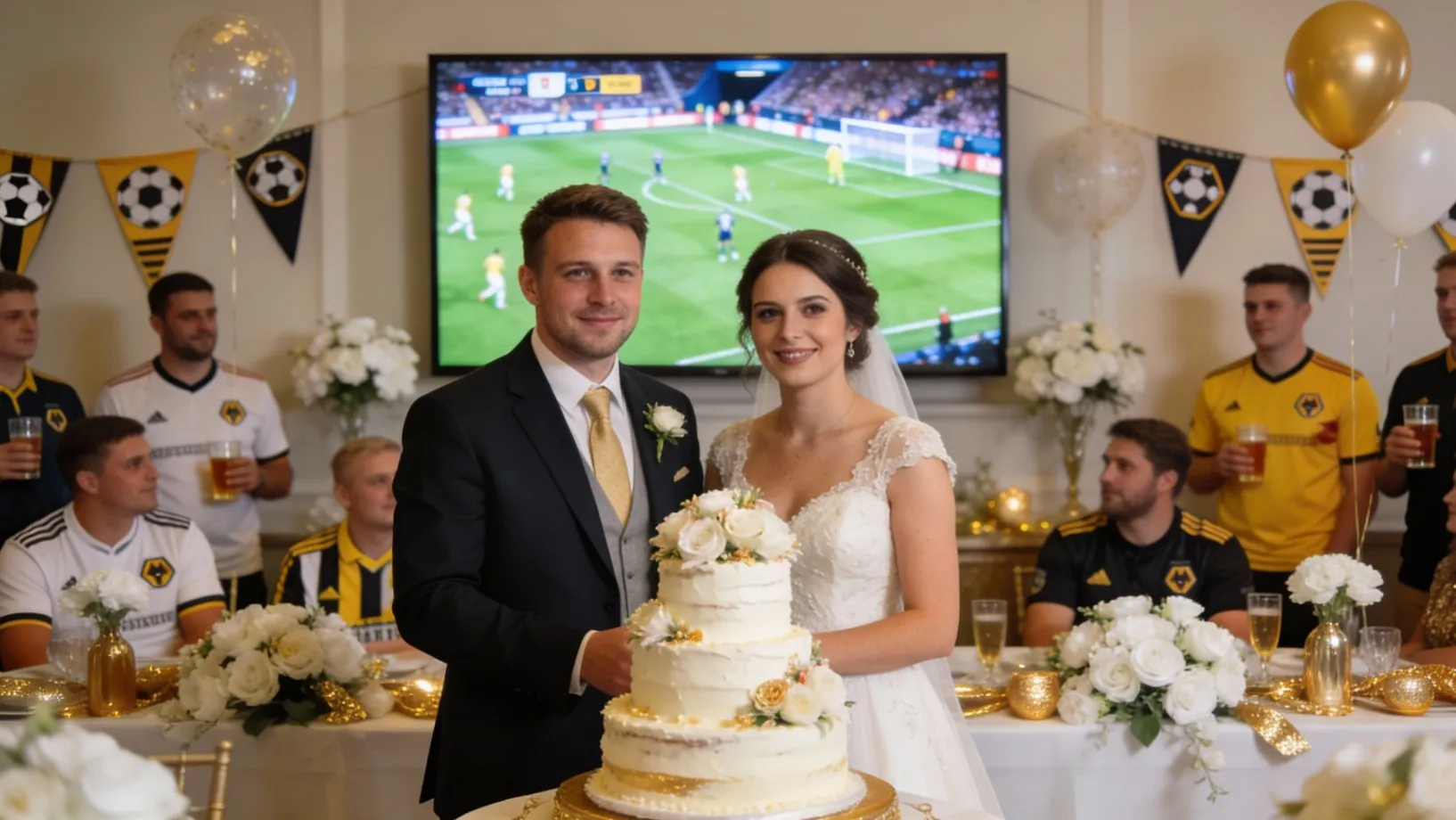
Not all overlaps are accidental. Some couples deliberately plan weddings during football tournaments, especially when both partners share a strong connection to the sport. For them, the tournament becomes part of the celebration rather than a disruption.
There are documented cases of themed weddings held on World Cup final days, with décor inspired by national colors and receptions timed around kickoff. In countries where football is deeply embedded in national identity, such as Brazil, Argentina, Germany, and Italy, this approach is surprisingly common.
In these cases, couples often see the tournament as a shared experience that enhances the wedding atmosphere. Guests are already emotionally invested in the event, creating a sense of collective excitement that spills into the celebration.
When football causes tension at weddings
However, not every overlap ends happily. There are numerous reports of weddings where one partner underestimated how seriously guests, family members, or even the other partner would take a major match.
Conflicts tend to arise when:
- A key national team match takes place during the ceremony
- Guests prioritize watching the game over participating in wedding traditions
- Venue restrictions prevent match viewing
- Cultural expectations clash with football fandom
In extreme cases, weddings held during decisive knockout matches have been remembered more for missed goals than exchanged vows. These stories highlight how powerful football’s pull can be during major tournaments.
Cultural differences in handling football–wedding clashes
Reactions to tournament overlaps vary widely by region. In some cultures, football is treated as a near-sacred event. In others, social obligations still take precedence.
In Southern Europe and South America, it is relatively common for wedding schedules to adapt around matches. Ceremonies may be held earlier in the day, with receptions starting after final whistles. In Northern Europe, compromises are more subtle, often involving discreet streaming rather than public screenings.
In countries where football fandom is less dominant, such as parts of East Asia or North America, tournament overlaps are less disruptive, even when international competitions are involved.
Weddings during iconic football finals
Some of the most memorable overlaps have occurred on the days of major finals. The World Cup final, in particular, has coincided with weddings multiple times across different decades.
The 2002 World Cup final, held in late June, overlapped with numerous weddings in Europe. Because the match took place early in the morning European time, some couples scheduled breakfast viewings before daytime ceremonies.
The 2010 World Cup final in July created similar situations, especially in Spain and the Netherlands, where national interest was overwhelming. Weddings held that weekend often included match screenings as part of the reception.
These examples show that even football’s biggest moments sometimes share the stage with life’s most personal events.
Practical lessons couples learned from these overlaps
Couples whose weddings coincided with major football tournaments often share similar reflections afterward. The experience tends to reinforce a few recurring lessons.
Most notably:
- Tournament calendars should be checked as early as possible
- Guest behavior during major matches is hard to predict
- Clear communication helps manage expectations
- Flexibility reduces stress on the wedding day
These lessons have influenced how modern couples approach date selection, especially in football-centric countries.
How tournament overlaps affect destination weddings
Destination weddings are particularly vulnerable to football conflicts. Major tournaments dramatically increase travel demand, accommodation prices, and logistical complexity.
During World Cups and continental championships, host countries experience massive influxes of fans. Couples planning destination weddings in these regions often face unexpected challenges, including limited venue availability and distracted guests.
Conversely, some couples intentionally avoid tournament host countries for this reason, shifting destination weddings to off-cycle years.
Why these overlaps continue to happen
Despite decades of experience, weddings continue to coincide with major football tournaments. The reasons are practical rather than careless. Wedding venues book years in advance, tournament dates are sometimes confirmed late, and personal calendars do not always align neatly with global sporting schedules.
Additionally, for many couples, the emotional significance of a chosen date outweighs potential inconveniences. Football, no matter how popular, remains secondary to personal milestones for those directly involved.
Conclusion
Wedding dates that coincided with major football tournaments offer a fascinating lens into how global sports culture intersects with private life. These overlaps are not rare anomalies but predictable outcomes of shared seasonal timing and cultural priorities.
For some couples, football tournaments became an unexpected backdrop that added character to their wedding stories. For others, they were lessons in planning and compromise. Either way, these moments highlight football’s extraordinary ability to influence daily life far beyond the pitch.
As long as major tournaments continue to dominate summer calendars, weddings and football will keep crossing paths, creating stories that couples and guests remember long after the final whistle.